MORROW and building for 100

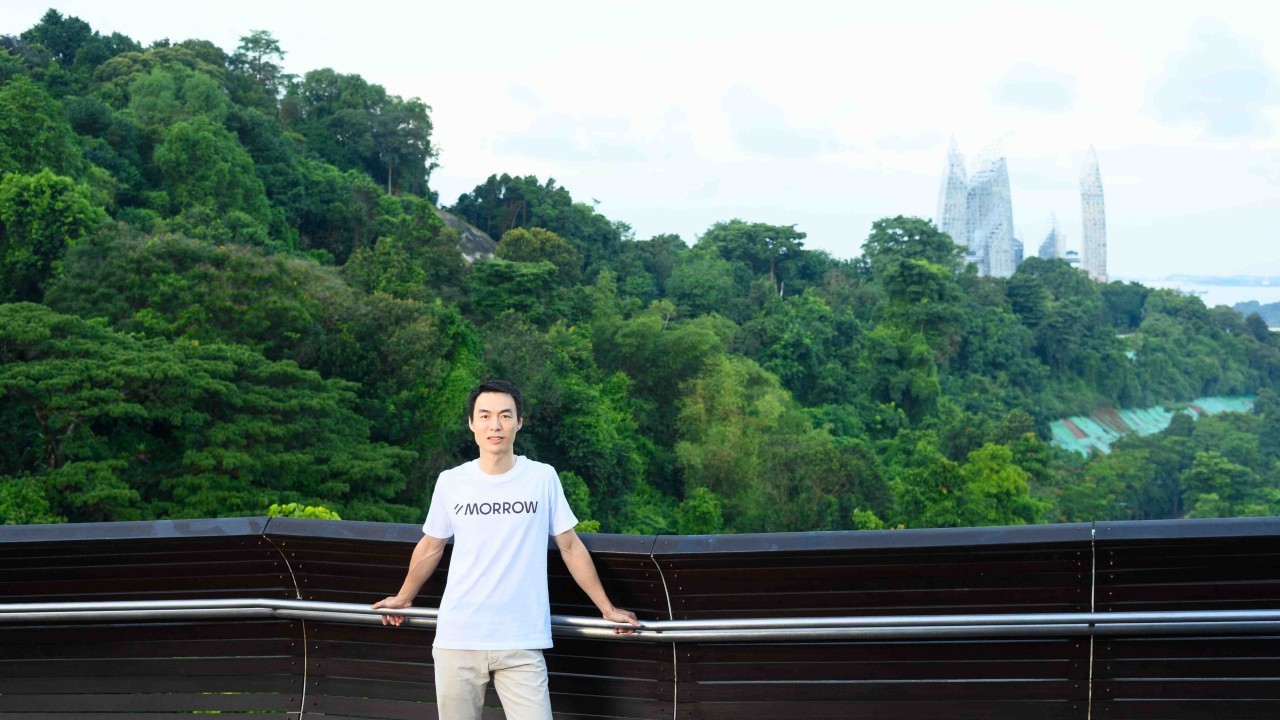
As MORROW opens, I'd like to share why I believe that our generations defining opportunity is learning how to build for longer lives.
One afternoon, my young sons asked me to pick them up and I realised I couldn’t.. It was a small moment but it made me confront a question I'd never really asked myself: would I remain healthy enough to enjoy the future I was working so hard to build?
Over time, I realised this wasn't just about me. The more I reflected on it, the more I realised that the problem wasn't simply individual. We have built extraordinary infrastructure to diagnose and treat illness. We have built far less to prevent it.
And that gap is becoming more important as people live longer.
That realisation became the foundation for what I came to call the Longevity Century: an era in which living longer becomes the norm, yet there remains no guarantee that those additional years will be lived in good health. This essay is not the story of a clinic, but of the much longer journey that led me to believe our generation needs to think differently about health, ageing and the infrastructure that will support longer lives
The Next Phase of Progress
The cities we live in and the institutions we depend on were all built long before we arrived. We inherited them, just like the longer lives many of us now take for granted. As Our World in Data observes, "Life expectancy has doubled over the last two centuries around the world". At the beginning of the Industrial Revolution, the average person could expect to live for around 29 years. Today, global life expectancy exceeds 73 years, according to the World Health Organization. In Singapore, it has reached 83.9 years. Clean water, sanitation, vaccination, antibiotics and advances in surgery helped people to survive illnesses that once proved fatal. Old age increasingly became a normal part of human life.
Those achievements also changed the questions we now need to answer. For centuries, medicine sought to reduce infant mortality, overcome infectious disease and extend life itself. In many parts of the world, those efforts have succeeded beyond what previous generations could have imagined. Yet longevity has revealed a new reality. Many people now spend a significant proportion of their longer lives managing chronic illness rather than enjoying good health. According to the World Health Organization, non-communicable diseases now account for almost three quarters of deaths worldwide.
Longer lives demand a different way of thinking. We built healthcare systems for a world where people lived shorter lives and sought treatment when they became ill.
The next phase of progress is about building systems that help people stay healthier for longer. I often find myself asking a simple question: if I live to 100, will the world around me help me stay healthy?
When Economic Wealth Changes Your Health
This is not a failure of modernity, but the opposite of it. The Industrial Revolution and the scientific advances that followed transformed human wellbeing on an extraordinary scale. Progress has extended our lives, but it has also created new health challenges. The same technologies that improved productivity also reduced physical activity. Greater food abundance made life easier, but it also created eating habits that our bodies have struggled to adapt to. Digital technologies have connected billions of people across continents while also contributing, for many, to increasing loneliness and social isolation, described as an epidemic by the U.S. Surgeon General.
Researchers have spent years documenting these changes. The Lancet's Physical Activity Series identifies inactivity as one of the leading contributors to preventable disease globally. A comprehensive umbrella review published in The BMJ found strong and consistent links between ultra-processed foods and bad health. None of these developments diminishes what previous generations achieved. They simply remind us that every solution creates a new set of problems we must solve.
The biggest opportunities don’t usually come from inventing something totally new. We recognise when the world has changed faster than the systems around it, and we jump on solving that problem. Looking at demographic change through that lens, I came to believe that healthcare had reached a similar moment. Extending human life was one of the defining achievements of the last century. The defining challenge of this one is learning how to help people remain healthier throughout those additional years.
The World Health Organization estimates that, on average, people spend almost a decade of their lives in poor health. We often celebrate increases in life expectancy as though every additional year were equal. They are not. Modern medicine is very successful at extending life, yet many of those extra years are lived while managing chronic disease, declining mobility or the gradual loss of vitality and personal independence. I have come to think of this as one of the quiet paradoxes of our age.
I'm not a doctor. I came to these questions through building businesses, where success depends on thinking years ahead. As I looked at the demographic shifts taking place around the world, it became clear that longer lives would create entirely new needs. The question wasn't simply how people would live longer, but what society would need to help them live those extra years well.
A Personal Realisation
That afternoon stayed with me because it revealed something I had overlooked for years. Parents rarely recognise the significance of ordinary moments while they are happening. Children become heavier almost imperceptibly. We become older in much the same way. Looking back, I realised the moment itself mattered far less than what it exposed. I had spent much of my career thinking carefully about businesses that would endure. I had devoted far less attention to ensuring that I would remain healthy enough to enjoy everything I was working so hard to build.
That experience did not inspire me to search for shortcuts or miracle solutions. Instead, it encouraged me to explore what the evidence actually says about healthy ageing. The more I read, the more the evidence pointed in the same direction. Different disciplines, studying different populations across different countries, repeatedly arrived at remarkably similar conclusions. The American College of Lifestyle Medicine now identifies nutrition, physical activity, restorative sleep, stress management, avoidance of harmful substances and positive social connection as the foundations of long-term health. Landmark studies such as PREDIMED demonstrate that sustained dietary patterns can significantly reduce cardiovascular risk.
Together, however, they pointed towards something both simpler and more profound: healthier lives are shaped less by isolated interventions than by the environments, daily habits and systems surrounding us every day.
The Longevity Century, a Reality I Couldn’t Ignore
Around the same time, I came across the idea of the longevity economy in an essay in The Lancet Healthy Longevity. The phrase gave a name to something I had already been thinking about. Longer lives will shape healthcare, housing, education, finance and the way we work. This isn't only a medical change, but a societal one. The challenge was not a lack of scientific knowledge, but learning how to organise that knowledge into systems that made healthier living easier to sustain.
I thought about this differently. If healthier, longer lives become one of the defining ambitions of this century, what kind of infrastructure will societies need to support them?
Preventive healthcare remains fragmented. People may receive diagnostics from one provider, nutritional advice from another and exercise guidance somewhere else. Yet movement, nutrition, sleep, stress and metabolic health influence one another. MORROW was designed to bring those disciplines together, centred around the individual.
That line of thinking eventually became the foundation for Longevity World. What if prevention became part of our infrastructure? I became interested in whether prevention could be organised differently: not as a series of separate services, but as a continuous system built around the individual as a whole.
My goal has never been to replace existing healthcare systems. Hospitals and primary care will always play an indispensable role in treating illness. The opportunity, as I see it, lies in strengthening what happens before disease becomes the defining feature of someone's life.
Those ideas eventually came together in The Longevity Century Manifesto, an attempt to express years of my own thoughts to invite others to think differently about the future.
Why MORROW, Today?
If the Longevity Century requires new infrastructure, MORROW is our attempt to help build it.
MORROW is a medically led preventive healthcare model that brings diagnostics, clinical guidance, movement, nutrition, recovery and coaching together under one roof. Rather than adding another specialist service to an already complex healthcare landscape, MORROW was designed as a blueprint for integrated personalised care.
One of the greatest privileges of building MORROW has been working alongside an extraordinary group of clinicians and scientists who continue to challenge conventional assumptions about preventive health.
MORROW Medical is led by Medical Director Dr Ari Ali Sahebkashaf, working alongside Dr Valerie Druon, whose expertise spans lifestyle and women's health. Clinical governance is overseen by Dr William Tan, physician, scientist, Paralympian and cancer survivor. They are supported by a world-class Scientific Advisory Board that brings together internationally recognised leaders in longevity science, preventive medicine and the biology of healthy ageing. Although each expert approaches ageing through a different clinical lens, they return to the same conclusion. Healthspan is rarely transformed by a single breakthrough, but shaped by thousands of decisions repeated consistently over time.
That is why MORROW is designed around more than diagnosis. Understanding biological age, metabolic health, body composition, cardiovascular risk, sleep quality, cognitive performance and hundreds of other biomarkers provides a remarkably detailed picture of where someone is today.
Yet information alone rarely changes behaviour. The greater challenge lies in translating those insights into practical daily habits that people can realistically sustain over years and decades. The purpose is not simply to generate more data, but to translate health information into actions people can sustain in everyday life.
Research consistently demonstrates that lasting behaviour change depends not upon willpower alone, but upon creating systems, feedback and environments that make healthier decisions easier to repeat. Data becomes valuable only when it changes what someone does tomorrow morning, next month and years from now. That is what MORROW is trying to do: give people a clearer understanding of the story their bodies are already telling, then equip them with the knowledge, clinical support and habits to shape the chapters that follow. And just as importantly, the community forming around Longevity World and MORROW. Every new member strengthens the ecosystem, creating a positive cycle where people learn from one another, motivate one another and make healthier living easier to sustain.
The Work Ahead
Singapore is the first proof point. Our ambition is to develop a model that can be adapted and scaled across different cities and healthcare systems. We hope to establish similar integrated centres across Hong Kong, the United States, the Middle East, Australia and beyond, adapting the model thoughtfully to different healthcare systems while remaining guided by the same principle: healthier, longer lives should become accessible, not more exclusive.
Yet geography has never been the real ambition. MORROW is one contribution to a much larger question. If the twentieth century taught humanity how to add years to life, the twenty-first must learn how to add life to those years. No single clinic, company or government will solve that challenge alone. Progress has always depended on people from different disciplines recognising the same problem and building towards a common future.
Every generation inherits unfinished work from the one before it. Ours has inherited the extraordinary gift of longer lives. What we choose to build around those lives may become one of the defining legacies of our own generation.

