April tends to bring a shift in perspective, where the pace of the first quarter gives way to something more revealing. Patterns begin to show not just in what has been done, but also in how systems are holding up over time.

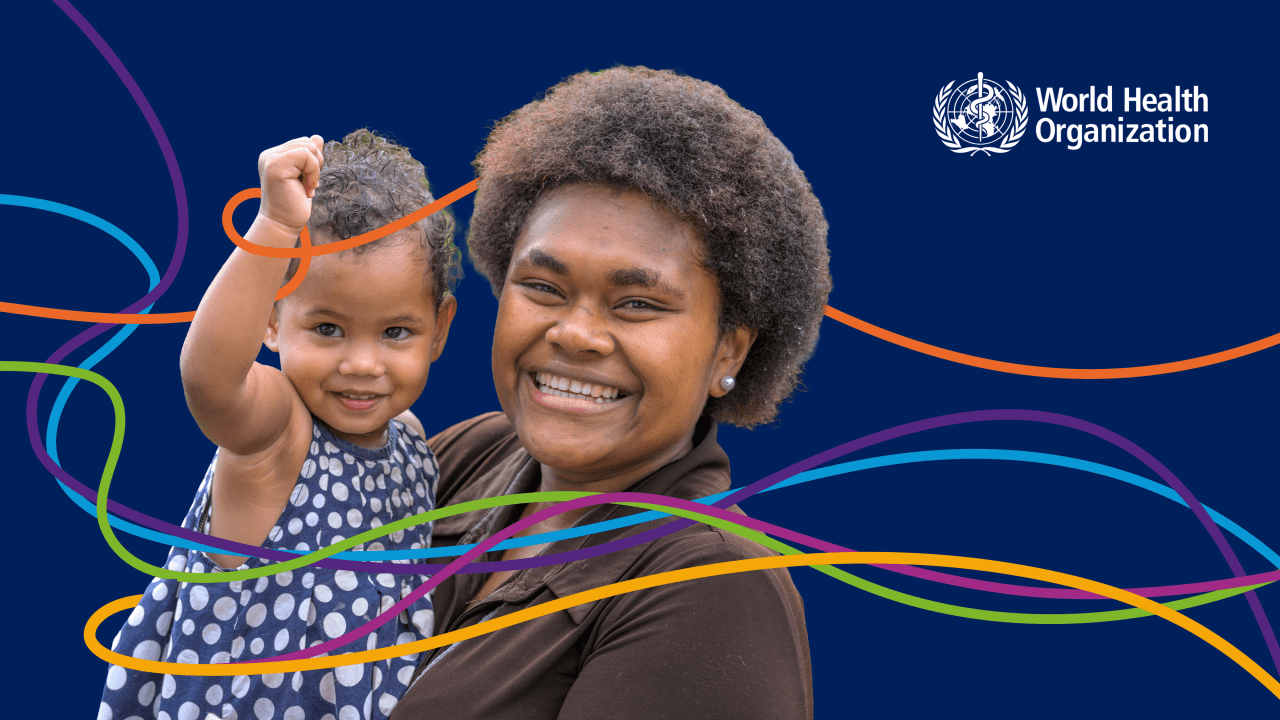
World Health Day sits naturally within that moment. Led by the World Health Organization, this year’s theme, “Together for health. Stand with science”, feels less like a call to discovery and more of a reflection on carrying existing knowledge into practice. Science itself is not in question. However, there is a lack of certainty as to how consistently it is applied in our daily lives.
The persistence of a known gap
This becomes clearer when looking at the broader trajectory of human health. Over the past century, lifespan has extended steadily, with global life expectancy now exceeding 70 years. Yet, healthspan, the years lived in good health, has not kept pace. Across World Health Organisation (WHO) member states, the average gap between healthspan and lifespan remains close to a decade, according to data from WHO Global Health Observatory.
What this points to is not a lack of understanding, but a lack of alignment between knowledge and implementation.
Health beyond institutional boundaries
Part of the explanation sits in how health continues to be organised. It is still approached in segments, divided across human, environmental and biological domains, each governed separately. The body does not operate within those boundaries, and neither do the conditions that shape long-term outcomes.
At the individual level, this structure becomes visible in how care is accessed. Interaction with clinicians is typically episodic and reactive, occurring after dysfunction presents itself, rather than as part of a continuous, preventive system. The underlying science for earlier intervention exists, but it is not consistently reflected in how health systems are designed or used.
Research increasingly reflects this shift, including work published in The Lancet which treats health as a function of interconnected systems rather than isolated variables. The implication is straightforward: outcomes are shaped not by the presence of knowledge alone, but by how well that knowledge moves across systems over time.
Where translation begins to fail
There is no shortage of scientific progress. Advances in clinical research, data science and preventive medicine have made the drivers of disease and ageing more visible than at any point before. The difficulty lies in translation.
Research published across journals such as Nature and The New England Journal of Medicine continues to highlight the distance between discovery and real-world implementation, where evidence must coexist with short-term incentives, fragmented infrastructure and institutional complexities and red tape. Even where the science is well established, its application remains uneven, and over time, that unevenness becomes structural.
A well-documented example can be seen in cardiovascular care. Large-scale trials have consistently shown that early management of risk factors such as hypertension and cholesterol significantly reduces long-term disease burden, yet real-world application remains inconsistent. In practice, delays in diagnosis and treatment are common, with one large cohort study showing that patients whose hypertension diagnosis was delayed were significantly less likely to receive timely treatment and faced a higher risk of cardiovascular events over time.
Even when treatment begins, it is not always sustained. Many patients do not continue preventive medication consistently, which reduces the impact of interventions that are otherwise highly effective.
The science, in this case, is not uncertain. The pathways for prevention have been well established for decades. What persists is the delay between evidence and routine practice, where intervention often follows acute events such as heart attacks or strokes rather than preceding them.
From evidence to infrastructure
It is within that context that science-led solutions take on greater importance. Not as an addition to existing systems, but as the foundation for how health is designed going forward.
Prevention, early detection and continuous management are already well understood in principle, yet they remain inconsistently applied because the infrastructure required to support them at scale has not been fully developed. Where systems are built around evidence from the outset, outcomes tend to follow more naturally. This won’t occur, through intervention alone, but through the conditions that those systems create over time.
Trust as a condition of effectiveness
This gap between evidence and application is not only structural, but also highly relational.
Where systems are inconsistent, trust tends to erode. And without trust, even well-established evidence struggles to translate into behaviour. This has been reflected in global health research, including work by The Lancet Commission on Trust in Health Systems, which links trust directly to engagement with care, adherence to treatment and the effectiveness of public health interventions.
Trust, in this context, is not an abstract quality. It forms gradually through consistency, credibility and the alignment between what is said and what is delivered over time. When that alignment holds, scientific insight is more likely to be adopted. And conversely, when it does not, even strong scientific evidence can remain underutilised.
Designing for what comes next
Seen in this way, standing with science becomes less about position and more about structure. It raises questions about how systems are designed, how decisions are made and how consistently evidence is prioritised over time. Analyses from organisations such as the Organisation for Economic Co-operation and Development (OECD) continue to point to fragmentation as a barrier to consistent outcomes, reinforcing that the challenge is not access to knowledge, but the coherence of the systems built around it.
This becomes more pressing as the nature of the problem shifts. The extension of lifespan is no longer the central question. What matters increasingly is how those additional years are lived, and whether health systems can sustain function, resilience and our independence over time.
Closing the gap between lifespan and healthspan depends less on new discovery and more on whether existing knowledge is allowed to shape the structure of everyday health. Science continues to advance over time. Where systems evolve alongside it, outcomes improve. Where they do not, the gap persists.

